(29).jpg)
Anti-inflammatory Bromelain active ingredient is a proteolytic enzyme complex belonging to the cysteine protease family, extracted primarily from the stem and fruit of the pineapple plant Ananas comosus. In the pharmaceutical and dietary supplement industries, the stem-derived extract, known as Stem Bromelain with the enzyme classification number EC 3.4.22.32, is most widely utilized due to its abundant supply from agricultural byproducts and stable biological activity. Unlike single-molecule synthetic drugs, Bromelain is a complex mixture containing thiol-endopeptidases alongside minor non-protease components such as phosphatases, glucosidases, peroxidases, cellulases, escharases, and protease inhibitors.
For research and development teams, anti-inflammatory Bromelain active ingredient serves as a viable alternative or adjunctive option to non-steroidal anti-inflammatory drugs in long-term management regimens. The prolonged use of conventional anti-inflammatory analgesics is frequently associated with gastrointestinal mucosal damage, driving the demand for naturally derived active ingredients that maintain efficacy in controlling inflammatory responses and edema. In formulations targeting osteoarthritis management and soft tissue trauma recovery, this raw material is extensively investigated for its multi-targeted action on both the inflammatory cascade and fibrinolysis at the site of tissue injury.
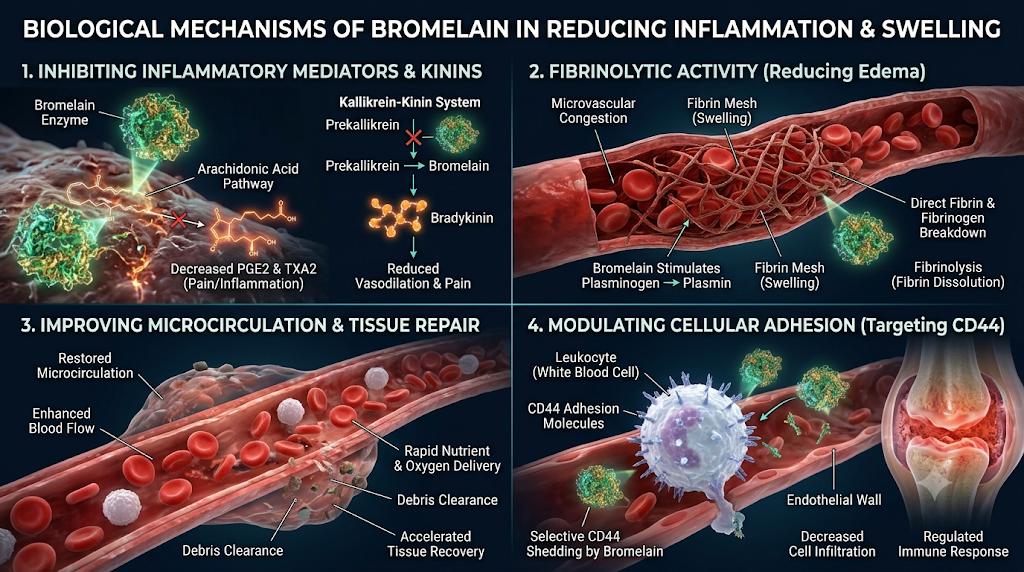
Pharmacological studies demonstrate that anti-inflammatory Bromelain active ingredient interferes with arachidonic acid metabolism, decreasing the synthesis of pro-inflammatory prostaglandins such as prostaglandin E2 and thromboxane A2 while maintaining or relatively increasing anti-inflammatory prostaglandins. Furthermore, the enzyme directly impacts the kallikrein-kinin system by lowering plasma and tissue bradykinin levels at the injury site. Bradykinin is a key mediator peptide responsible for vasodilation, increased vascular permeability, and sensitization of nociceptive nerve endings. By inhibiting the activation of prekallikrein to kallikrein, Bromelain restricts fluid extravasation into interstitial spaces, thereby explaining the mechanism behind how Bromelain enzyme reduces swelling and localized pain.
In musculoskeletal trauma or orthopedic surgery, fibrin accumulation within capillaries surrounding the injured area impedes blood circulation, leading to localized hypoxia and prolonged edema. Bromelain promotes fibrinolysis through two parallel pathways. First, the enzyme stimulates the conversion of plasminogen into plasmin, an endogenous enzyme responsible for cleaving the fibrin network. Second, Bromelain exhibits direct proteolytic degradation of fibrin and fibrinogen both in vitro and in animal models. Restoring microcirculation enhances the delivery of nutrients and immune cells to clear cellular debris, creating favorable conditions for accelerated Bromelain tissue recovery.
At the cellular immunity level, experimental evidence confirms that Bromelain selectively cleaves specific adhesion molecules on the surfaces of leukocytes and endothelial cells, notably the CD44 molecule. The presence of CD44 is essential for guiding leukocyte migration from the vascular lumen across the endothelium into inflamed joints or traumatized tissues. By reducing the surface expression density of CD44 on T-lymphocytes and neutrophils, this active ingredient limits excessive inflammatory cell infiltration into the joint space, helping control chronic inflammation without inducing systemic immunosuppression.
In preparations supporting osteoarthritis management, particularly knee osteoarthritis, Bromelain is administered either as a monotherapy or combined within hydrolytic enzyme complexes alongside trypsin and rutoside. Clinical trials evaluating formulations containing Bromelain for osteoarthritis at daily doses ranging from 500 mg to 1,000 mg demonstrate significant improvements in WOMAC pain and physical function scores, showing short-term efficacy comparable to non-steroidal anti-inflammatory drugs such as diclofenac while exhibiting a lower incidence of gastrointestinal adverse events.
In dietary supplement formulation development, formulators frequently combine anti-inflammatory Bromelain active ingredient with cartilage-building compounds such as glucosamine sulfate, chondroitin sulfate, methylsulfonylmethane, or standardized turmeric curcuminoids. This synergistic approach addresses two distinct aspects of joint pathology simultaneously by controlling acute swelling and pain via enzymatic action while supplying structural substrates for long-term cartilage repair.
For products targeting recovery from soft tissue injuries, sprains, muscle contusions, or dental and orthopedic surgeries, the primary formulation objective is to shorten the duration of post-traumatic hematomas and edema. Medical literature documents that oral administration of Bromelain prior to or immediately following surgical interventions significantly reduces swelling, bruising, and post-operative analgesic requirements. This outcome is directly linked to its capacity to clear necrotic protein debris and re-establish lymphatic drainage at the damaged tissue site, physiologically advancing Bromelain tissue recovery.
Due to its proteinaceous nature, Bromelain is highly susceptible to degradation by strong gastric acid and pepsin proteolysis in the stomach. Although a small fraction of Bromelain can be absorbed intact across the small intestinal mucosa via endocytosis and paracellular transport without complete loss of enzymatic activity, protecting the enzyme during gastric transit is critical to ensuring finished product bioefficacy.
Common technical strategies employed in formulation include:
Below is a list of verified commercial formulations available in international and Vietnamese markets containing Bromelain aimed at controlling inflammation, edema, and supporting joint health.
Image | Brand | The role of raw materials | |
|---|---|---|---|
| Mediplantex | Bromelain is the main active ingredient that helps reduce inflammation, break down fibrin, and treat swelling and edema after surgery. | ||
 | Mediplantex | Bromelain acts as a protein-hydrolyzing enzyme, helping to reduce inflammation, swelling, and aid in the dissolution of edema and bruising. |