(16).png)
Bacillus is a genus of Gram-positive, rod-shaped bacteria characterized by their ability to form endospores under unfavorable environmental conditions. Endospores allow bacteria to enter a dormant state with high resistance to various environmental stresses, representing a distinctive biological characteristic of the Bacillus genus. In the probiotic field, B. clausii and B. subtilis are two notable species used in probiotic formulations for human consumption.
The key difference of Bacillus does not lie in being a “better probiotic,” but rather in its ability to form spores. While many probiotics, such as Lactobacillus and Bifidobacterium, are primarily used in their vegetative cell form, Bacillus can survive in the form of spores, providing resistance to various unfavorable physical and chemical conditions. This represents an important technological advantage, making Bacillus a noteworthy platform for probiotic product development.
When nutrient availability decreases, vegetative Bacillus cells can activate a differentiation program known as sporulation. The cell forms an asymmetric septum, generating a forespore and a mother cell. The mother cell subsequently engulfs the forespore and regulates its maturation. The forespore continues to develop protective structures, including a peptidoglycan-rich spore cortex, a spore coat, and internal protective mechanisms. Eventually,the mother cell undergoes lysis and releases the mature endospore.
When favorable conditions return, the endospore recognizes environmental signals and initiates germination. During this process, Ca-DPA is released, the cortex is degraded, and the spore core undergoes rehydration. Metabolic activity is restored, allowing the spore to develop into a vegetative cell capable of growth and division.
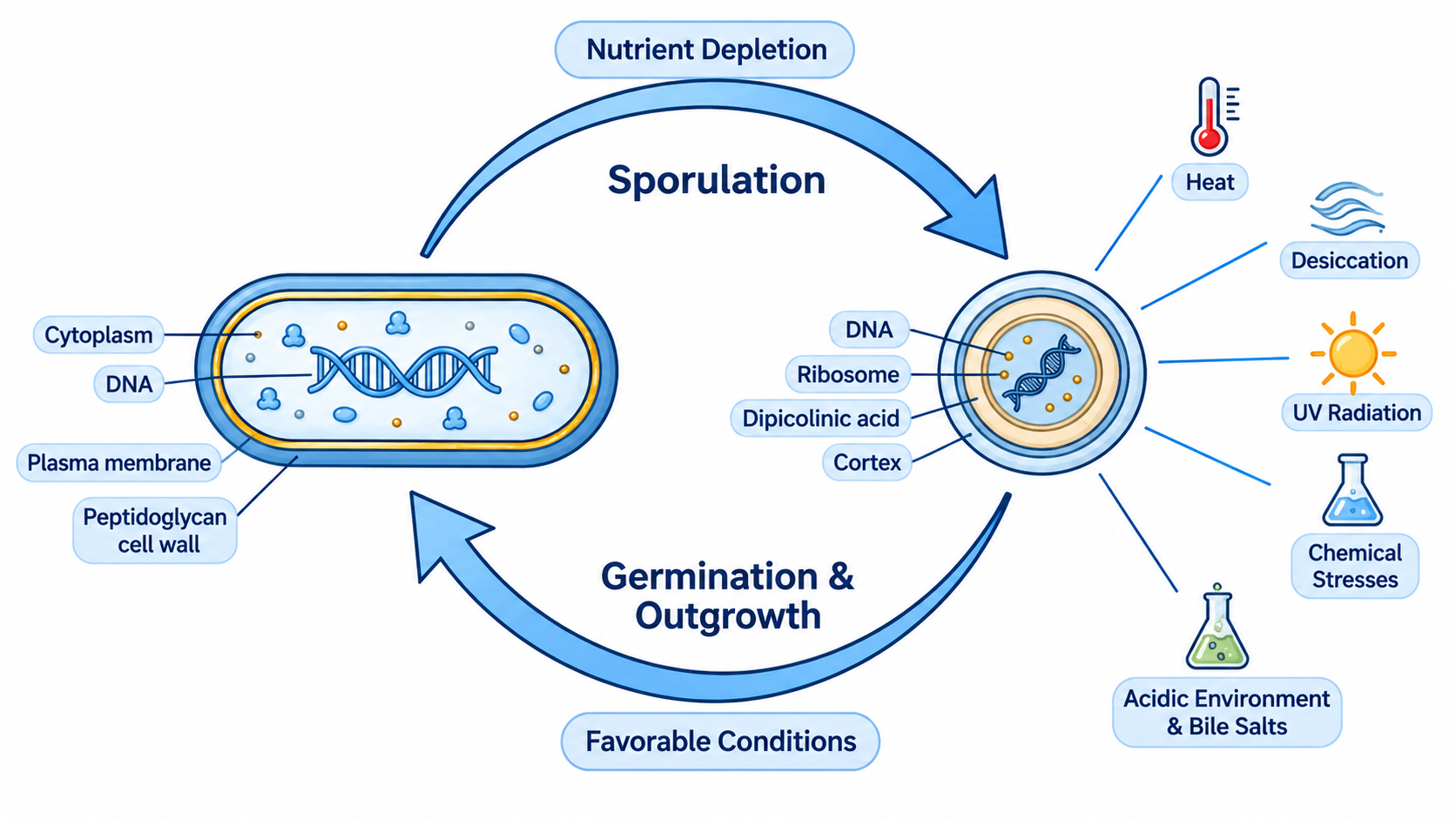
Note: Spore formation is a species-level characteristic; however, stress resistance, germination capacity, and biological activities may vary among individual strains.
| Characteristics | B. subtilis | B. clausii |
|---|---|---|
| Structural characteristics | Gram-positive, rod-shaped bacterium capable of forming endospores | Gram-positive, rod-shaped bacterium capable of forming endospores |
| Spore stability | Multilayered structures provide enhanced resistance to heat, desiccation, UV radiation, and gastrointestinal conditions | Resistant to heat and gastrointestinal conditions |
| Antibiotic resistance | Most naturally occurring strains are generally susceptible to antibiotics. | Certain strains exhibit a broad-spectrum antibiotic-resistant phenotype. Resistance genes are non-transferable throughhorizontal gene transfer to other harmful bacteria, ensuring biosafety. |
| Antimicrobial activity | Produces various antimicrobial metabolites, including surfactin, plipastatin, and bacillaene | Certain strains secrete clausin, which inhibits selected Gram-positive bacteria, including S. aureus, E. faecium, and C. difficile. |
| Biological characteristics | Rich extracellular enzyme system, including proteases, amylases, and xylanases, along with diverse secondary metabolic pathways | Good mucosal adhesion. Produces β-galactosidase, which hydrolyzes lactose, and synthesizes vitamins B2, B5, and B12 in certain characterized strains. |
| Clinical evidence | Gastrointestinal clinical studies have primarily focused on specific strains, such as BS50, DE111, and R0179. | Has a longer history of clinical research in gastrointestinal probiotics, particularly in the management of diarrhea. |
| Criteria | B. subtilis | B. clausii |
|---|---|---|
| Dosage forms | Capsules, powders, and granules | Oral suspension, typically supplied in ampoules; capsules, powders, and granules are also available. |
| Clinical applications | Helps relieve digestive discomfort and bloating. Supports immune modulation and gut microbiota balance. | Specifically used in the management of diarrhea. |
Examples of commercial probiotic products
| Product | Dosage form | Microbial strain – concentration | Indications / Benefits |
|---|---|---|---|
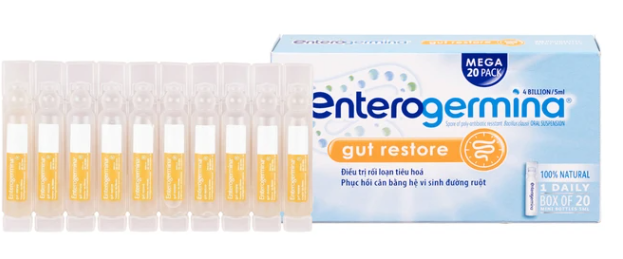 | Oral suspension | B. clausii (strains SIN, O/C, T, N/R) – 4 × 10⁹ CFU | Intestinal microbiota disturbances, impaired absorption of endogenous vitamins, and support for intestinal microbiota recovery |
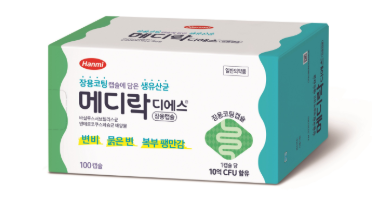 | Enteric-coated capsules | B. subtilis (strain R0179) and Enterococcus faecium (strain R0026) – 1 × 10⁹ CFU | Intestinal disorders, loose stools, constipation, intestinal putrefaction, and flatulence |
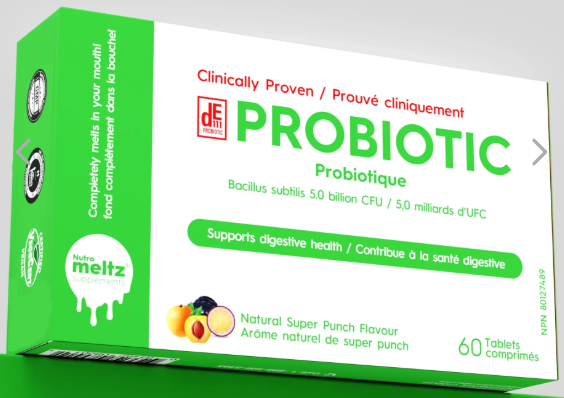 | ODT | B. subtilis (strain DE111) – 5 × 10⁹ CFU | Helps relieve nausea, heartburn, abdominal fullness, and bloating |
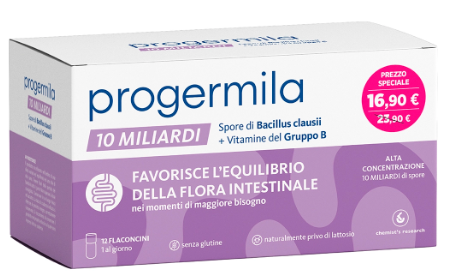 | Oral suspension | B. clausii (strain UBBC-07) – 10 × 10⁹ CFU | During or after antibiotic treatment. Supports intestinal microbiota balance and daily immune function |
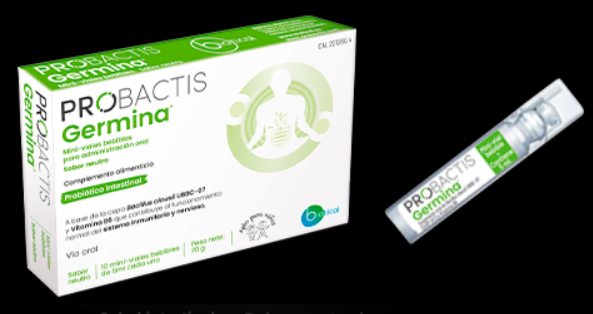 | Oral suspension | B. clausii (strain UBBC-07) – 2 × 10⁹ CFU | Supports intestinal microbiota balance and helps relieve symptoms of indigestion |
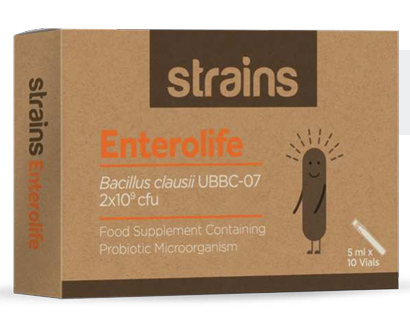 | Oral suspension | B. clausii (strain UBBC-07) – 2 × 10⁹ CFU | Supports intestinal microbiota balance, immune function, and vitamin absorption |