Analysis of the adhesion and cohesion imbalance that causes sticking, picking, and binding phenomena. Guide to using the matrix to identify the root cause.
1. The Importance of Friction Control in Tablet Compression
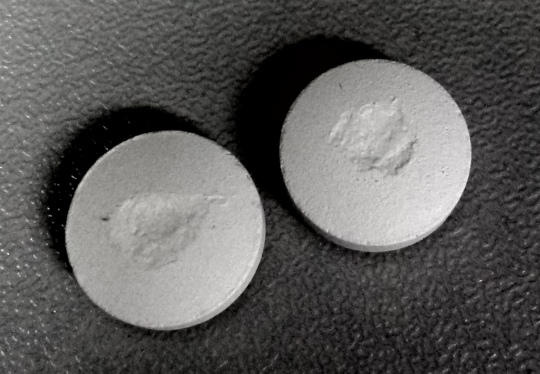
During tablet compression, tablet quality is not determined solely by the formulation or the properties of the granules. At the stages of compression and tablet ejection from the punches and dies, other factors play a critical role in determining the interaction between the tablet and the compression tooling (Tablet ↔ Tooling). When this interaction is not properly controlled, materials may adhere to punch surfaces, accumulate around logos or embossed characters, or generate excessive friction against die walls, leading to common defects such as sticking, picking, and binding.
These three phenomena are often considered separate defects. However, from a mechanistic perspective, they share a common feature: the interaction between the tablet and the compression tooling (Tablet ↔ Tooling).
Sticking: Material tends to adhere to the punch surface.
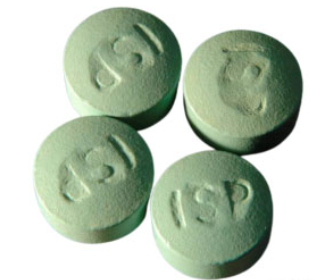
Picking: Adhesion occurs primarily at logos, letters, or engraved areas on the punch.
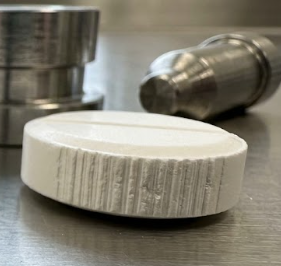
Binding: The tablet exhibits friction or adhesion against the die wall, resulting in increased ejection force.
The issue is not simply the insufficient amount of lubricant. Rather, what disrupts the balance between adhesion, cohesion, and friction during compression, decompression, and tablet ejection?
2. Causes of Sticking – Picking – Binding
The occurrence of sticking, picking, and binding does not result from a single factor. Instead, it arises from the interaction of multiple factors related to the formulation and tablet compression process.
Sticking
Definition: Sticking is the phenomenon in which a portion of the tablet material adheres to the punch surface during compression and punch separation from the tablet, affecting the tablet surface, morphological uniformity, or tablet shape.
Mechanism: This phenomenon occurs when the adhesion force between the material and the punch surface exceeds the cohesion force within the tablet matrix, causing a portion of the material to remain on the punch.
Causes:
Powder/granule properties (Blend): High moisture content, excessive fines, uneven moisture distribution in granules, or non-uniform distribution of lubricants or anti-adherents.
Formulation: Insufficient lubricant or anti-adherent, excessive binder, insufficient binder leading to fine granules, or the use of hygroscopic ingredients or active ingredients with low melting points.
Manufacturing process: Formation of fine granules due to insufficient kneading, high wet granulation speed, inappropriate sieve mesh size, etc.; oversized granules that retain moisture internally; or inappropriate drying moisture levels.
Punches and dies: Worn punch surfaces or unsuitable punch design, such as excessively deep concave punches.
Environment: High room humidity and temperature.
Picking
Definition: Picking is a specific form of sticking in which tablet material adheres to and is pulled away from the tablet at recessed areas or engraved features on the punch surface, such as logos, letters, or symbols. Due to the contact area and localized geometry of these engraved features, adhesion may concentrate at these locations, resulting in material loss and defects in surface details of the tablet.
Mechanism: This phenomenon occurs when the adhesion force between the tablet material and the punch surface at a localized area exceeds the cohesion force within the tablet matrix, causing a portion of the material to remain on the corresponding punch feature.
Causes:
Powder/granule properties (Blend): High moisture content, excessive fines, uneven moisture distribution in granules, or non-uniform distribution of lubricants or anti-adherents.
Formulation: Insufficient lubricant or anti-adherent, excessive binder, insufficient binder leading to fine granules, or the use of hygroscopic ingredients or active ingredients with low melting points.
Manufacturing process: Formation of fine granules due to insufficient kneading, high wet granulation speed, inappropriate sieve mesh size, etc.; oversized granules that retain moisture internally; or inappropriate drying moisture levels.
Punches and dies: Worn punch surfaces or unsuitable punch design, such as excessively thin or deep engraved logos or letters.
Environment: High room humidity and temperature.
Binding
Definition: Binding is the phenomenon in which tablet material adheres to the die wall during tablet compression, increasing the friction force between the tablet and the die wall during ejection. This phenomenon may increase the ejection force and cause defects on the lateral surface or edges of the tablet.
Mechanism: This phenomenon occurs when the adhesion force between the tablet material and the die wall exceeds the cohesion force within the tablet matrix, causing a portion of the material to remain on the die wall and thereby increasing the friction force between the tablet and the die wall.
Causes:
Powder/granule properties (Blend): Fine granules resulting in poor lubrication efficiency, excessively high granule moisture content, rapid moisture absorption by granules, or non-uniform distribution of lubricants.
Formulation: Insufficient lubricant, excessive adhesive components, insufficient anti-caking agents resulting in increased moisture sensitivity, or an excessively thick tablet design.
Manufacturing process: Formation of fine granules due to insufficient kneading, high wet granulation speed, inappropriate sieve mesh size, etc.; inappropriate drying moisture levels; or non-uniform blending of lubricants.
Compression parameters: Excessive fill depth, excessively hard tablets, excessively high compression speed, or excessively high pre-compression force.
Punches and dies: Worn, scratched, or deformed inner die surfaces.
Environment: High room humidity and temperature.
Sticking, picking, and binding appear to be three different defects, but they all reflect a broader issue: suboptimal interactions between the particles within the tablet and the compression tooling.
When sticking, picking, or binding occurs, the underlying causes may originate from multiple levels, ranging from raw materials → formulation → process → equipment and compression conditions → environment. Therefore, a tablet defect is merely the endpoint of a series of interactions and does not necessarily indicate that the root cause lies at the location where the defect is observed. Accurate identification of the Root Cause is essential for implementing appropriate corrective measures, as well as controlling and preventing recurrence during manufacturing.
To identify the root cause, a defect–cause matrix can be used to determine the inspection priorities.
Analysis of the biological characteristics, endospore formation mechanisms, clinical differences, and probiotic preparations containing Bacillus clausii and Bacillus subtilis.
Learn about Methylene chloride (Dichloromethane – DCM): its physicochemical properties, safety standards, advantages of rapid evaporation, and applications as a film coating solvent and pharmaceutical extractor.
Learn about Silicified Microcrystalline Cellulose (SMCC) – a co-processing solution for MCC with 2% colloidal silicon dioxide that enhances flowability, compressive strength, and optimizes straight forging.
Analysis of the synergistic mechanism between Aluminum Hydroxide, Magnesium Hydroxide, and Simethicone in neutralizing gastric acid, breaking down gas bubbles, and controlling digestive symptoms.
Analysis of technological differences between Dibasic Calcium Phosphate Anhydrous and Dihydrate in terms of physicochemical parameters, surface pH, and application selection of direct compression excipients.
This article provides a detailed analysis of the physicochemical properties, acid neutralization mechanisms, and practical applications of Sodium Bicarbonate and Calcium Carbonate in pharmaceuticals.
Biorich Group
Thông tin
Biorich Group provides raw materials and supply chain solutions for the pharmaceutical, nutrition, healthcare, cosmetics, food, and industrial sectors, with a global network of partners.
Main category
Loading...
Featured videos
Sign up to receive news
Sign up for our weekly newsletter to get the latest updates.
 (25)(1).jpg)