Explore Isopropyl Alcohol in pharmaceuticals, including its physicochemical properties, solubility, and applications in wet granulation, film coating, and antisepsis
Isopropyl Alcohol (IPA), also known as isopropanol, 2-propanol, or dimethylcarbinol, is an organic compound belonging to the secondary alcohol group. IPA is a colorless, volatile, and flammable liquidwith a characteristic odor similar to a mixture of ethanol and acetone.
It is one of the most widely used organic solvents in the pharmaceutical industry due to its good solubilizing capacity, rapid evaporation, low residue, and effective antibacterial activity. Among lower alcohols (C1–C5), IPA ranks third in global production, after ethanol and methanol.
2. Physicochemical Properties of Isopropyl Alcohol
Isopropyl Alcohol
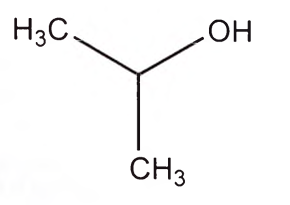
Structural Formula
Molecular Formula
C₃H₈O
Molecular Weight
60.10 g/mol
Boiling Point
82.5°C
Flash Point
11.7°C
Autoignition Temperature
425°C
Oral LD50 in Rats
5.05 g/kg
ICH Q3C
Group 3
Bactericidal Activity
Stronger than Ethyl Alcohol
Source
Petroleum
Regulatory Status
Less affected
3. Advantages of Isopropyl Alcohol in Pharmaceuticals
Good Solubilizing Capacity: IPA can dissolve many active pharmaceutical ingredients and excipients with medium to low polarity. This solubilizing capacity makes IPA a suitable solvent for granulation and film coating processes.
Rapid Evaporation and Reduced Solvent Residue: It enables rapid drying after granulation, reduces drying time, increases production efficiency, and minimizes solvent residues in the finished product. Its rapid evaporation also helps reduce the risk of affecting the stability of moisture-sensitive active ingredients.
Compatibility with a Wide Range of Active Ingredients and Excipients
High Antibacterial Efficacy: Isopropyl Alcohol is widely used in cleaning agents, disinfectants, and antiseptic products.
Acceptance in International Pharmacopoeias
4. Role of Isopropyl Alcohol in Pharmaceutical Manufacturing
Applications of Isopropyl Alcohol in Pharmaceuticals and Healthcare:
Solvent in Wet Granulation Processes: Used for moisture-sensitive active ingredients or those with low water solubility.
Film Coating Solvent: Its ability to dissolve various polymers allows IPA to be combined with water to improve the solubility or dispersion of film-coating solutions.
Solvent/Cosolvent: Supports the dissolution of poorly water-soluble active ingredients in liquid dosage forms.
Antiseptic Active Ingredient: Used in hand sanitizers, skin disinfection solutions before injection, and hospital antiseptic products.
Solvent in Analytical Testing and Quality Control: Used in thin-layer chromatography (TLC), high-performance liquid chromatography (HPLC), and gas chromatography (GC).
Extraction and Purification Solvent: Used in extraction and recrystallization processes.
Antiseptic and Disinfectant for Manufacturing Equipment
Cleanroom Disinfection
Applications of Isopropyl Alcohol in Electronics and Semiconductor Technology:
Cleaning printed circuit boards and semiconductor chips
Optical cleaning
Dehydrating agent
Applications of Isopropyl Alcohol in the Paint and Coatings Chemical Industry:
Dissolving solvent
Chemical precursor
Applications of Isopropyl Alcohol in Daily Life and Transportation:
Analysis of the biological characteristics, endospore formation mechanisms, clinical differences, and probiotic preparations containing Bacillus clausii and Bacillus subtilis.
Learn about Methylene chloride (Dichloromethane – DCM): its physicochemical properties, safety standards, advantages of rapid evaporation, and applications as a film coating solvent and pharmaceutical extractor.
Learn about Silicified Microcrystalline Cellulose (SMCC) – a co-processing solution for MCC with 2% colloidal silicon dioxide that enhances flowability, compressive strength, and optimizes straight forging.
Analysis of the synergistic mechanism between Aluminum Hydroxide, Magnesium Hydroxide, and Simethicone in neutralizing gastric acid, breaking down gas bubbles, and controlling digestive symptoms.
Analysis of technological differences between Dibasic Calcium Phosphate Anhydrous and Dihydrate in terms of physicochemical parameters, surface pH, and application selection of direct compression excipients.
This article provides a detailed analysis of the physicochemical properties, acid neutralization mechanisms, and practical applications of Sodium Bicarbonate and Calcium Carbonate in pharmaceuticals.
Biorich Group
Thông tin
Biorich Group provides raw materials and supply chain solutions for the pharmaceutical, nutrition, healthcare, cosmetics, food, and industrial sectors, with a global network of partners.
Main category
Loading...
Featured videos
Sign up to receive news
Sign up for our weekly newsletter to get the latest updates.
 (21).jpg)