High-purity Methylene Chloride (Dichloromethane) for pharmaceutical manufacturing, laboratory, and industrial applications. Effective organic solvent with strong dissolving power and quality compliance.
1. General Introduction to Methylene Chloride (Dichloromethane)
Methylene Chloride also known as Dichloromethane (DCM)is a colorless, volatile organic solvent widely used in pharmaceutical manufacturing, laboratory research, and specialized chemical processing. With the chemical formula CH₂Cl₂, Methylene Chloride is recognized for its strong dissolving capability, low boiling point, and rapid evaporation rate.
In pharmaceutical production environments, Dichloromethane plays a critical role in active pharmaceutical ingredient (API) extraction, reaction media processes, and intermediate purification. Its controlled volatility and high solubility efficiency make Methylene Chloride particularly suitable for GMP-compliant API synthesis and formulation processes.
2. Chemical Composition of Methylene Chloride (Dichloromethane)
Methylene Chloride is a single-component chlorinated hydrocarbon compound:
Chemical Name: Dichloromethane
Molecular Formula:CH₂Cl₂
Molecular Weight: 84.93 g/mol
Available Purity Levels: ≥99%, ≥99.5%, ≥99.9%
This product does not contain pharmacologically active ingredients but serves as a high-performance organic solvent in synthesis, extraction, and purification processes.
3. Advantages of Methylene Chloride (Dichloromethane)
In pharmaceutical manufacturing and fine chemical synthesis, solvent selection directly impacts reaction efficiency, final product purity, and residual solvent control. Methylene Chloride (Dichloromethane) is highly valued for its balance of solvency strength, volatility, and chemical stability, helping optimize both technical performance and operational efficiency in GMP-regulated environments.
Key advantages include:
Strong dissolving power for a wide range of moderately polar organic compounds
Low boiling point (~39.6°C) enabling efficient solvent recovery and energy savings
Fast evaporation rate minimizing residual solvent risk
Suitable for API synthesis and purification under GMP standards
Cost-effective for large-scale production due to high dissolving efficiency
Stable performance in controlled laboratory and manufacturing environments
4. Applications of Methylene Chloride (Dichloromethane)
Pharmaceutical Applications:
API extraction and purification due to selective solubility of moderately polar organic compounds
Reaction solvent in organic synthesis, providing a stable medium for acylation, alkylation, chlorination, and cyclization reactions
Intermediate compound processing, phase transfer, and purification. Its ease of removal helps reduce residual solvent risk when controlled under ICH Q3C guidelines
Laboratory Applications:
Analytical sample preparation, including extraction of active compounds from complex matrices prior to HPLC, GC, or LC-MS analysis
Mobile phase or elution solvent in column chromatography and thin-layer chromatography (TLC)
Sample solvent in GC analysis due to complete evaporation and minimal residue
Industrial Applications:
High-performance paint and coating removal with fast penetration for efficient surface treatment
Solvent for adhesives and engineering resins including thermoplastics such as polycarbonate and acrylic
Precision metal degreasing, effectively dissolving mineral oils, lubricants, and organic contaminants
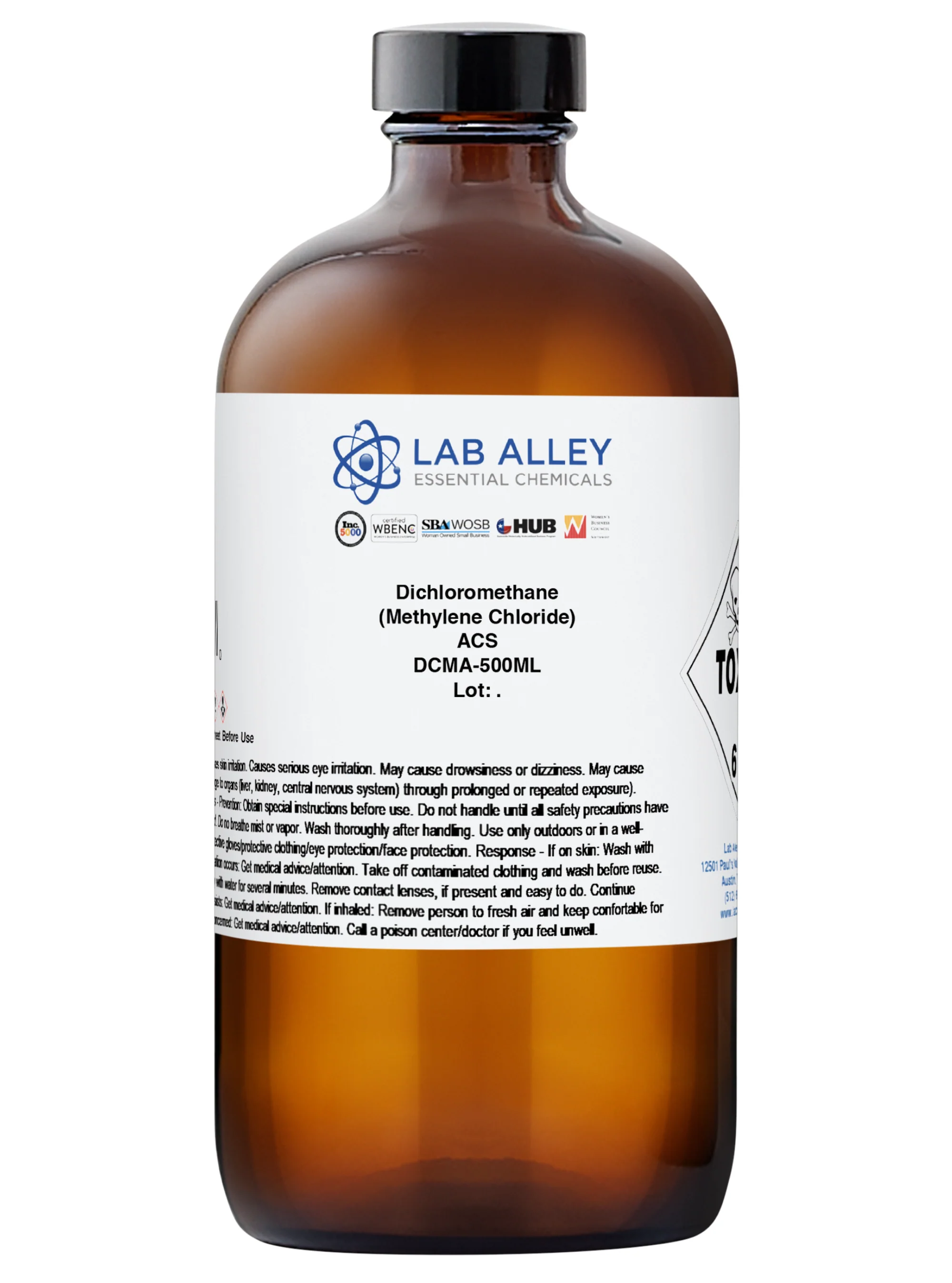
5. Sample methylene chloride products
6. Product Contact Information
For more information aboutMethylene Chloride (Dichloromethane)supply, please contact us:
Biorich Group supplies Camphor - an active pharmaceutical ingredient (API) that helps relieve pain, prevent itching, and create a cooling sensation. Optimally applied in ointments, medicated oils, massage balms, and cosmetics. Contact us now to receive a sample and COA!
Ketoprofen Raw Material – International standard Active Pharmaceutical Ingredient (API), widely used in the formulation of analgesic and anti-inflammatory drugs. Contact Biorich now!
Chlorhexidine Gluconate – Highly effective antibacterial and surface antiseptic solution. Widely applied in healthcare and personal care. Contact Biorich now!
Biorich Group
Thông tin
Biorich Group provides raw materials and supply chain solutions for the pharmaceutical, nutrition, healthcare, cosmetics, food, and industrial sectors, with a global network of partners.
Main category
Loading...
Featured videos
Sign up to receive news
Sign up for our weekly newsletter to get the latest updates.
 avatar - Biorich Group.jpg)
.png)
.jpg)