Loading...
Loading...

What Is Nitrosamine? Risks of Nitrosamine Impurities in Pharmaceutical Raw Materials

Learn what nitrosamines are, how they form in APIs and excipients, the associated risks, and current regulatory limits for pharmaceutical raw materials. 

Mở/Đóng

    1. What are Nitrosamines?

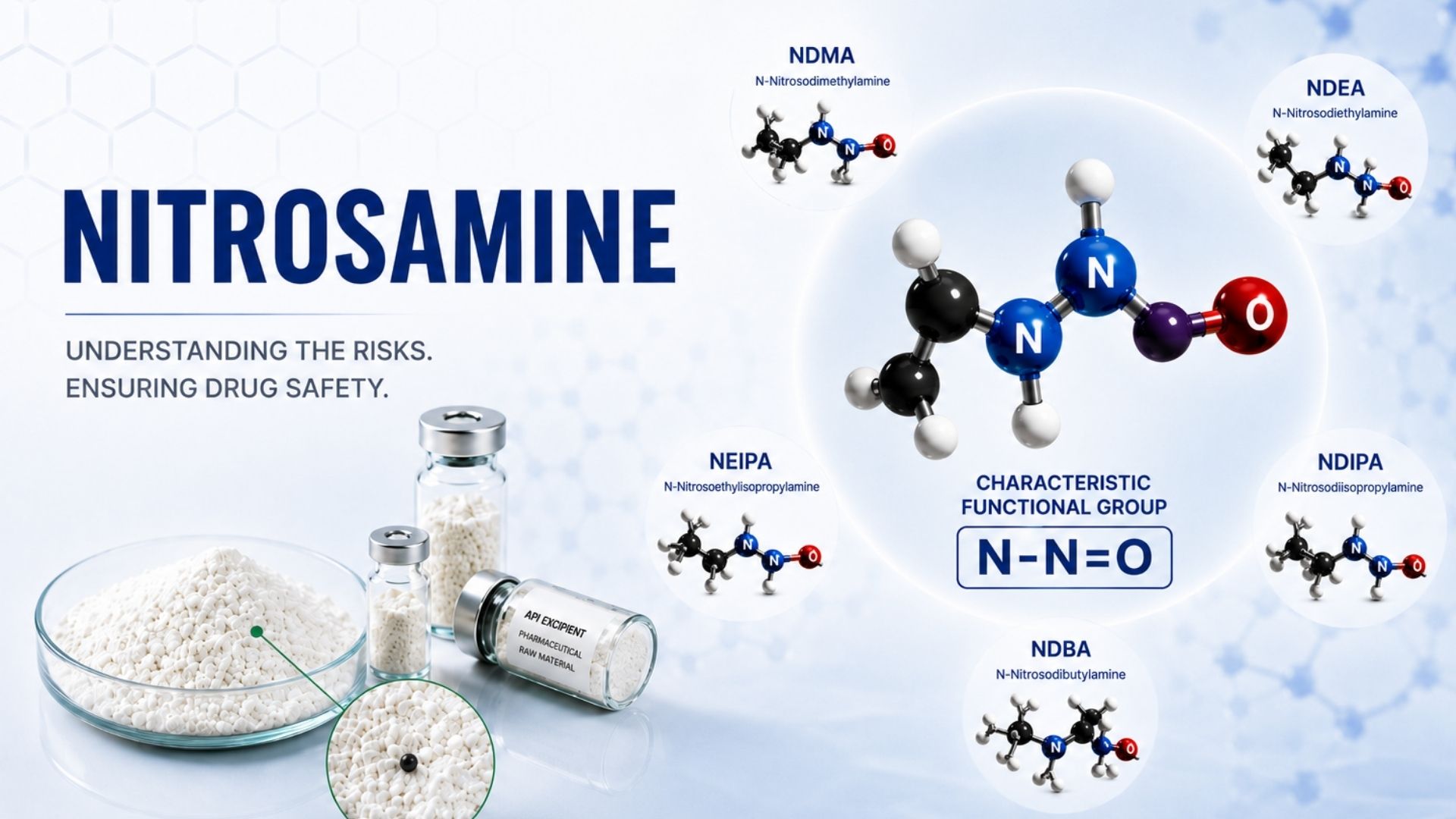
    Nitrosamines are a class of compounds containing the N-nitroso functional group (-N–N=O). They are generally formed through the reaction of amines with nitrosating agents, particularly nitrite under acidic conditions.

    Nitrosamines of pharmaceutical concern include:

    • N-Nitrosodimethylamine (NDMA)
    • N-Nitrosodiethylamine (NDEA)
    • N-Nitrosoethylisopropylamine (NEIPA)
    • N-Nitrosodiisopropylamine (NDIPA)
    • N-Nitrosodibutylamine (NDBA)

    Many nitrosamines are classified as mutagenic impuritiesand several have been identified as probable human carcinogens. Their presence in pharmaceutical products has become a major regulatory concern since the discovery of NDMA contamination in Valsartan products in 2018, which resulted in multiple product recalls worldwide.

    2. Nitrosamine Formation in APIs and Pharmaceutical Excipients

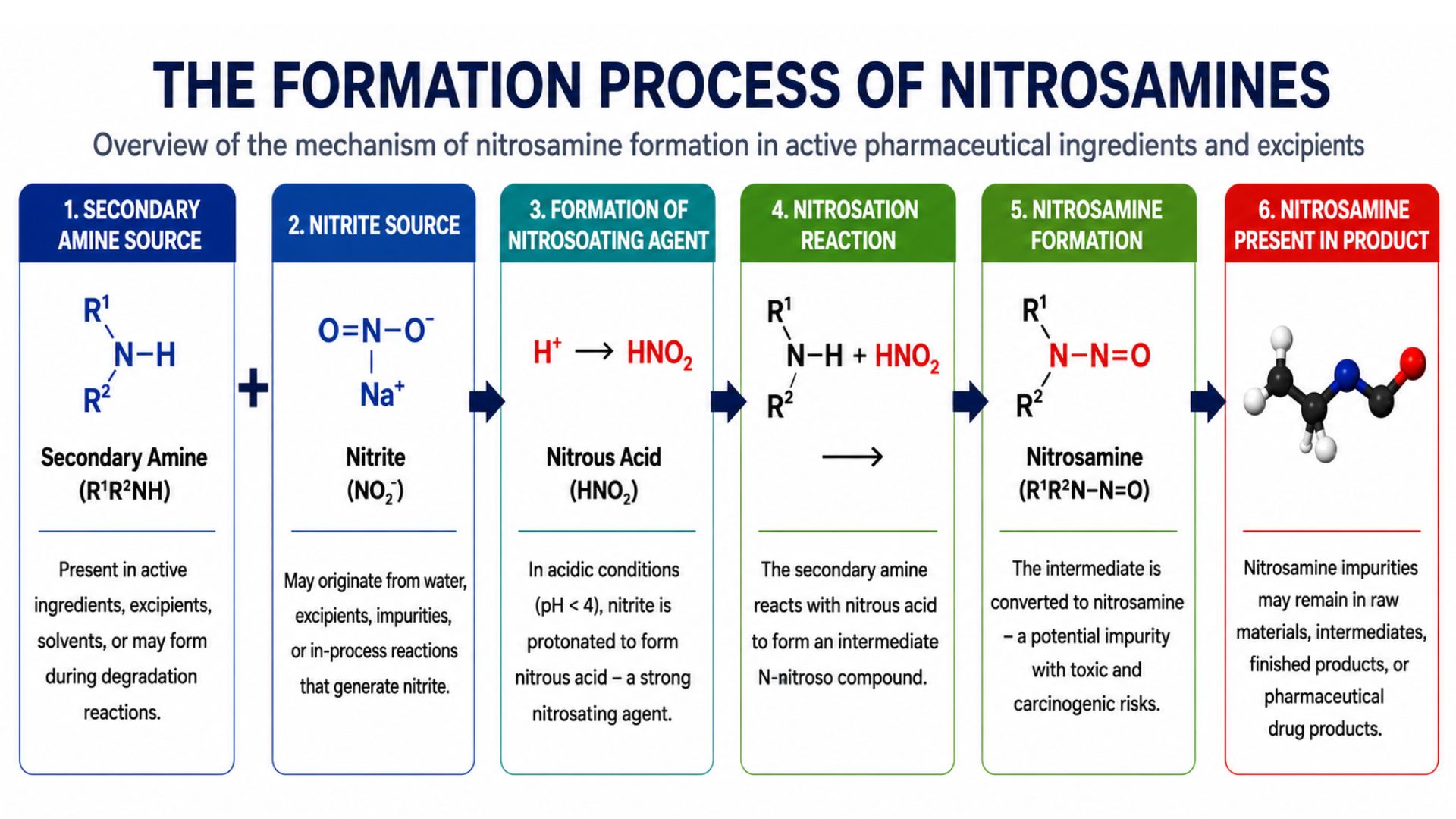
    Nitrosamine formation requires three fundamental elements:

    • An amine source
    • A nitrosating agent (typically nitrite)
    • Suitable reaction conditions such as moisture, temperature, and pH

    In pharmaceutical manufacturing, nitrosamines are not intentionally introduced. Instead, they may be generated during API synthesis, excipient manufacturing, formulation, or storage.
    a. API synthesis

    API manufacturing processes frequently involve amines, amide-containing reagents, or nitrite salts. When these substances are present simultaneously under favorable conditions, nitrosamines may form as process-related impurities.

    Common precursors include:

    • Dimethylamine
    • Diethylamine
    • Triethylamine
    • Sodium nitrite
    • Potassium nitrite

    For example: Dimethylamine + Nitrite → NDMA.This reaction pathway was identified as one of the primary sources of nitrosamine contamination in several sartan APIs.

    b. Recovered solvents

    Recovered or recycled solvents may contain residual amines or trace levels of nitrosamines. Without adequate purification and process control, repeated solvent reuse can increase nitrosamine levels during API manufacturing.

    c. Nitrite impurities in raw materials

    Trace nitrite may be introduced through: Purified water, inorganic reagents, pharmaceutical excipients, synthetic intermediates. Although typically present at ppm or ppb levels, nitrite impurities may react with susceptible amines over time to generate nitrosamines.

    d. API degradation

    Certain APIs containing secondary or tertiary amine structures may generate nitrosamines during storage. Factors influencing degradation include: Elevated temperature, High humidity, Nitrite contamination. Nitrosamine formation through degradation has been reported for APIs such as Ranitidine and Nizatidine.

    3. Pharmaceutical Materials Associated with Nitrosamine Risk

    a. Active Pharmaceutical Ingredients (APIs)

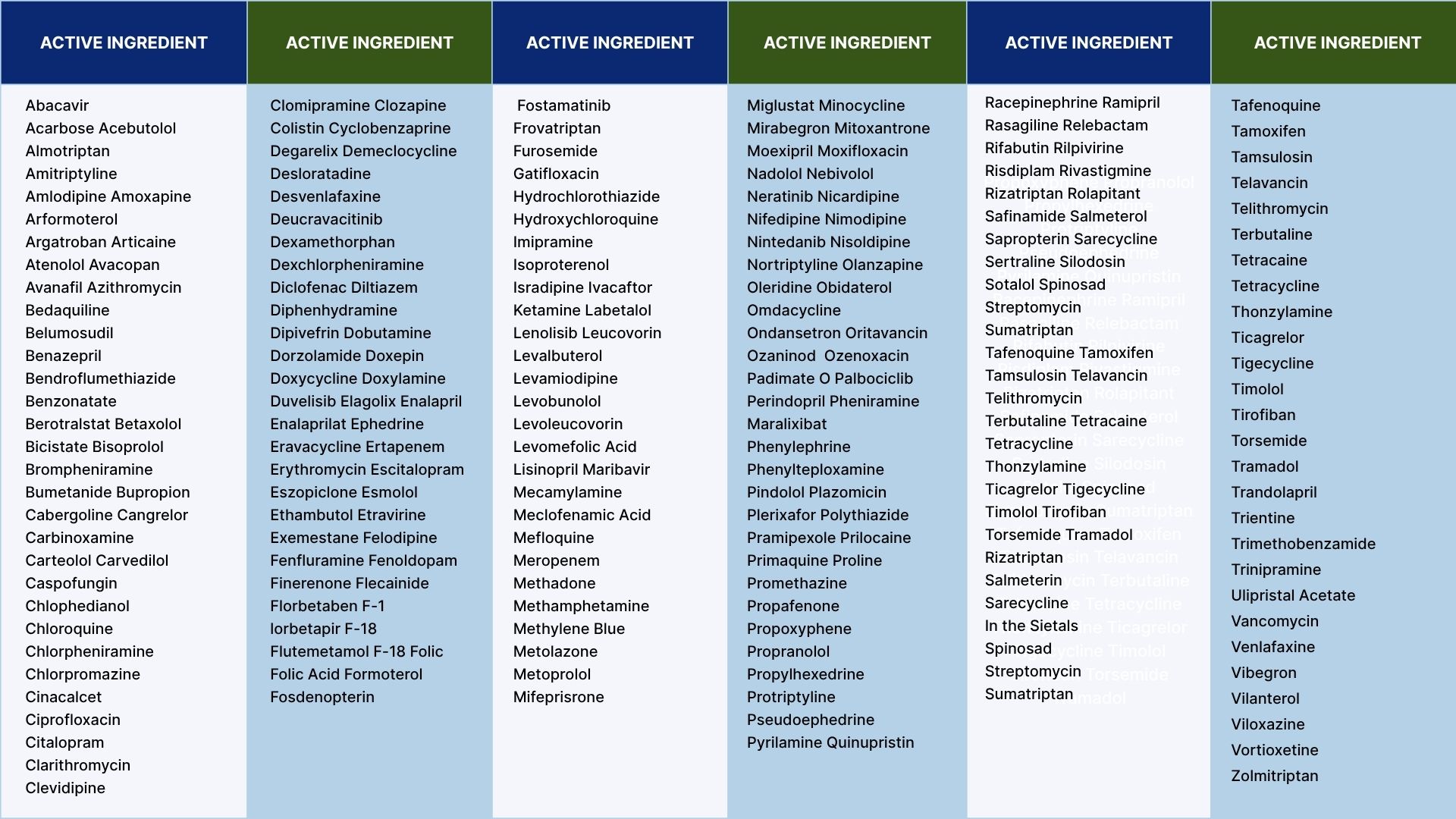
    APIs containing secondary or tertiary amine functionalities generally present a higher risk for nitrosamine formation. Examples include: Metformin, Ranitidine, Nizatidine, Doxylamine, Varenicline, Valsartan, Losartan, Irbesartan
    b. Pharmaceutical Excipients

    Although excipients are not typically direct sources of nitrosamines, some may contribute to nitrosamine formation. Potential risk factors include:

    • Nitrite-containing excipient:Nitrite impurities may be present at trace levels depending on the manufacturing process and raw material source.
    • Amine-containing excipients: Excipients containing amine functionalities may react with nitrite under suitable conditions to generate nitrosamines.

    4. Regulatory Limits for Nitrosamine Impurities

    Global regulatory agencies, including the FDA and EMA, have established acceptable intake (AI) limits for nitrosamine impurities based on toxicological risk assessment. The acceptable intake limits for commonly encountered nitrosamines are summarized in the table below. Note: 1 ng = 10⁻⁶ mg. For the latest acceptable intake limits, refer to the CDER Nitrosamine Impurity Acceptable Intake Limitsguidance.

    • Chia sẻ qua viber bài: What Is Nitrosamine? Risks of Nitrosamine Impurities in Pharmaceutical Raw Materials
    • Chia sẻ qua reddit bài:What Is Nitrosamine? Risks of Nitrosamine Impurities in Pharmaceutical Raw Materials

    Bài viết liên quan

    Overview of Enteric-Coated Tablets and Commonly Used Enteric Coating Polymers

    Enteric-coated tablets protect active pharmaceutical ingredients from gastric acid and enable site-specific drug release within the gastrointestinal tract. Learn about their purpose, coating-film characteristics, suitable APIs, and commonly used enteric polymers including CAP, HPMCP, HPMCAS, PVAP, and Eudragit.

    Matrix Systems in Sustained-Release Tablets: Mechanisms, Excipients, and Lipid Applications

    An in-depth analysis of matrix systems in the formulation of sustained-release tablets. Explore drug release mechanisms, excipient classifications (hydrophilic, inert, and lipid), and the advanced benefits of lipid matrix technologies in modern pharmaceutical development.

    Microcrystalline Cellulose (MCC): A High-Compressibility Direct Compression Excipient for Tablet Manufacturing

    MCC is produced through the acid hydrolysis of cellulose under high temperature and pressure.

    Polyvinyl Alcohol (PVA): Film-Forming Mechanism and Moisture Barrier Performance in Film Coating Technology

    Tablets are solid unit-dose dosage forms with a defined geometric shape. Each individual unit is formulated to contain a precise amount of one or more active pharmaceutical ingredients (APIs). Tablets are manufactured by applying mechanical compression to a blend of granules or fine powders, with or without excipients, using specialized tablet compression equipment.

    Overview of Ion Exchange Resins: Mechanisms, Advantages, and Applications in Taste-Masking Formulations.

    This article details the polymer nature of ion exchange resins (IER) and their reversible complexation mechanism for effective taste masking. It highlights their safety, compatibility, and wide applications in suspensions, powders, chewable tablets, and ODTs.

    Glyceryl Dibehenate – A matrix-forming excipient for controlled release

    Lipid matrix frames used for sustained-release tablets are an increasingly popular trend in the pharmaceutical manufacturing industry, offering advantages in controllability, stability

    Mở/ĐóngMở/Đóng